Excerpt from AIMICI’s AI Documentation & Disclosure Standard – A Proposal for Film & TV, As Presented for Consultation
Foreword
AIMICI exists to build responsible AI practices for the film and television industry, which no generic framework was designed to provide. Specifically, we are building a shared foundation of applied governance – one built to organise and operate through the varying degrees of AI knowledge, applications, and rules. That foundation rests on two pillars; training and transparency. Having spent the last two years working with industry to build a standard for the first pillar (training), this paper sets out our recommended approach to the second (transparency).
Two years ago we asked the following question: can a single ‘AI competency’ standard be created to help the UK screen industry establish a baseline knowledge and understanding of the risks (and opportunities) of AI? The answer was yes. Under a mandate from UKRI’s BridgeAI programme, and drawing on the UK Gov AI Skills Framework, we created an accessible short training course that builds, tests and proves AI competency for UK film and TV. Working with academic partners and more than fifty industry professionals, it is accredited by ScreenSkills and trusted by PACT, UK Screen Alliance, the Production Guild of Great Britain, BAFTA, Equity and a number of regional Screen Agencies. It is the first and only accredited AI competency standard built by, and for, this industry. Training is no longer the open question. Transparency is.
At present, a production can’t prove how it used AI beyond its own paperwork. “Transparency” has been quietly annexed by a narrower, more litigated question: what data an AI model was trained on? That’s the question copyright litigation has made easiest to ask. It’s not the question commissioners, insurers or audiences actually want answered: whether a production used AI responsibly. This involves knowing what was used, by whom, on what, and under whose oversight. On this, the industry has no shared approach. Broadcasters, streamers and commissioners each write their own disclosure clauses, forcing content makers to navigate them all.
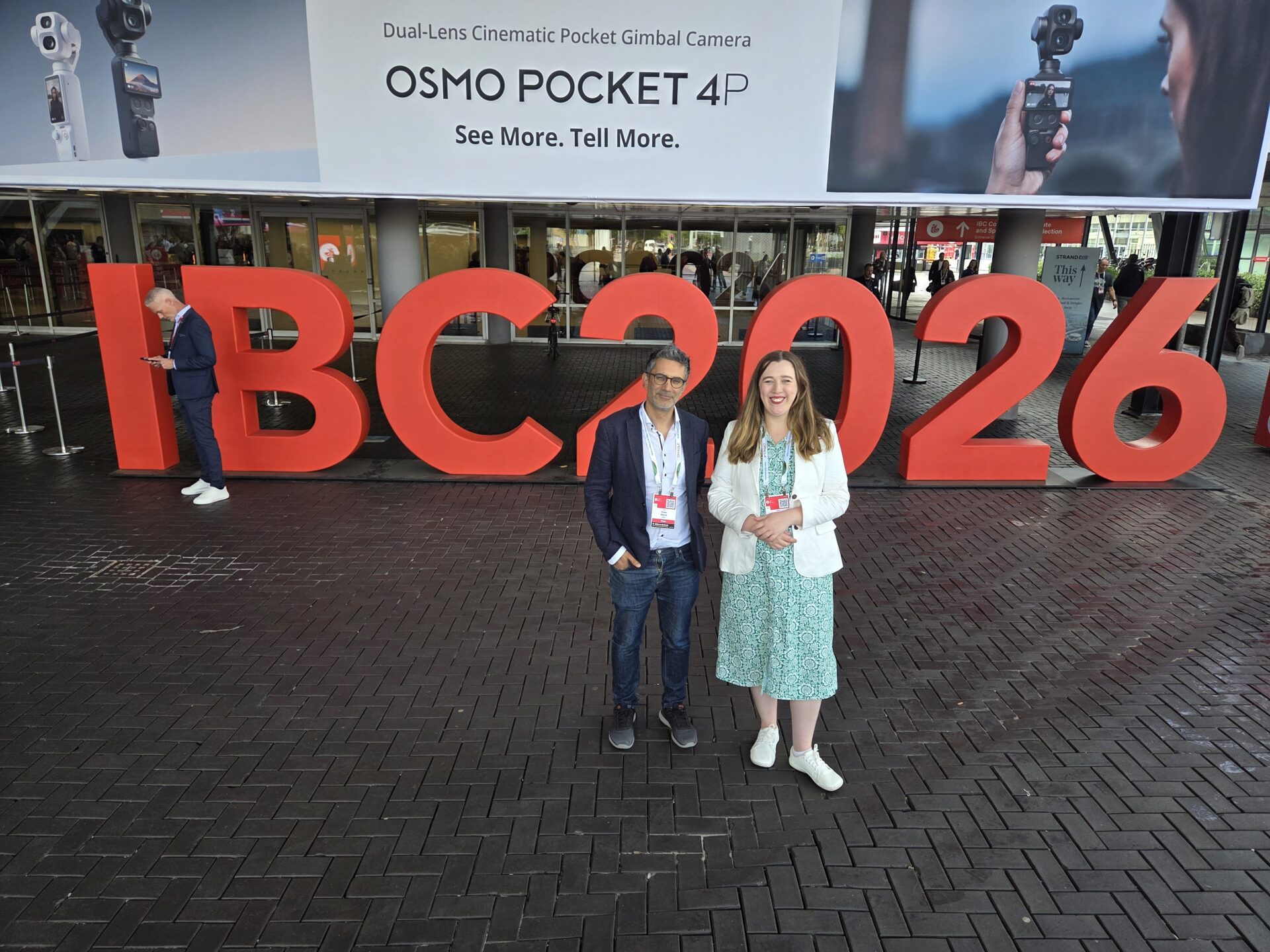
This paper draws together two years of work: our thesis on why “transparency” has been narrowed to mean the wrong thing, our reading of what the EU AI Act’s Code of Practice actually requires of productions rather than model-builders, the standard built from both, and what we learned testing it on live productions, including the IBC accelerator project, FRAMES, presented alongside our US and European partners on 11 September. The result: a shared schema and a graduated disclosure format. Less guesswork, less admin costs, more focus on creativity. We’re putting it to the industry to test, challenge, and adopt where it holds up.
Introducing the new standard
Our AI Documentation & Disclosure Standard (ADDS) proposes a shared, voluntary standard for reporting AI use in film and TV.
Overview - The Three Levels of ADDS
Level 1
Production AI Statement
For viewing audiences & press
A short, plain-language set of three statements, appropriate to show on screen and/or include in the credits, that the production creates according to the importance of the aspects of the AI used in the production and/or its compliance needs.
Our suggested format includes;
– Where/how AI was not used
– Where/how AI was used, alongside key compliance notes
– Human accountability in the process
Level 2
Production AI Card
For industry & stakeholders (Commissioners, financiers, distributors, insurers, unions, internal staff etc.)
A one-page reference detailing AI use cases and tools, and relevant attributes around risk, visibility and significance of the AI use.
This is organised into production stages and includes a high-level record of
– use cases and tools used to facilitate them, labelled with relevant attributes
– the roles of people involved who were responsible for human oversight over the governance process,
– the names of the businesses involved in record-keeping across production.
Level 3
Auditable AI Record
For auditors, legal, insurers, commissioner-level governance, awards bodies, Gov Authorities (Tax Credit etc.)
A set of full records which cover necessary details of AI usage and governance on a production
This may include signed declarations, decisions and a high-level actions log, and further details about tools and licensing. It can also include consent records and granular actions & asset-level data, such as the machine-readable AI marks required by the EU AI Act.
Now open for Industry Consultation
What We’re Consulting On
We’re inviting key players from the film & TV industry to review the approach – the three levels, the classification labels and the tiered access, and to tell us where it holds up and where it doesn’t – both as an overall structure, and in the details.
A full list of questions are shared in the paper Appendix A, covering topics such as:
- the need for independent assurance,
- how the standard connects to existing provenance tools,
- keeping the standard workable for smaller productions,
- how it interacts with existing standards and regulations
Who We’re Inviting To the Consultation
- Global commissioners and platforms: broadcasters and streamers already writing their own disclosure requirements, who have a clear incentive to converge on one shared format to help productions, from which individual corporate standards can still be maintained.
- Trade and industry bodies: including PACT, UK Screen Alliance, RTS and the Production Guild of Great Britain, whose members are the professionals impacted by baseline transparency requirements.
- Government backed bodies and Unions for the industry : Regional Screen Agencies, BFI, Unions such BECTU and Equity having an interest in ensuring transparency help protect positions of employment.
- Those having an interest in recognising human talent: Awards bodies, including BAFTA, AMPAS and local film festivals, given the unresolved question of how use of AI should be measured into eligibility criteria.
- Insurers, whose underwriting practice is directly affected by whether a standardised, checkable disclosure record exists.
- International partners: EBU, RAI and MovieLabs, given the FRAMES project’s direct role in testing the Standard, and the cross-border reality that most productions of scale are not disclosing into the UK alone.
- Government officials leading the AI Adoption Plan and the committed ‘AI labelling taskforce’, including Sally Davies and Rt Hon Kanishka Narayan.
- Technology providers, including those who provide technical solutions to support the creation of relevant AI-related records, or AI tools that are used in productions.
How The Consultation Will Be Run
We are officially opening the consultation on October 3rd, and beginning to take requests to view the paper and participate starting October 1st.
Any participants in the consultation must review the detailed paper. You can submit a request to view it via the form below, or by email to standards@aimici.co.uk. Requests made by parties appropriate to join the consultation will be prioritised.
Once the detailed paper has been reviewed, written responses against the numbered questions in the paper’s appendix can be sent to standards@aimici.co.uk.
We will also be organising individual and group sessions for further discussions.
Initial responses are due by 6 November 2026, and we’ll publish interim findings and a response document on 13 November setting out what changed and why.
Further roundtables and detailed testing is targeted to run from 15 November 2026 to 30 January 2027.