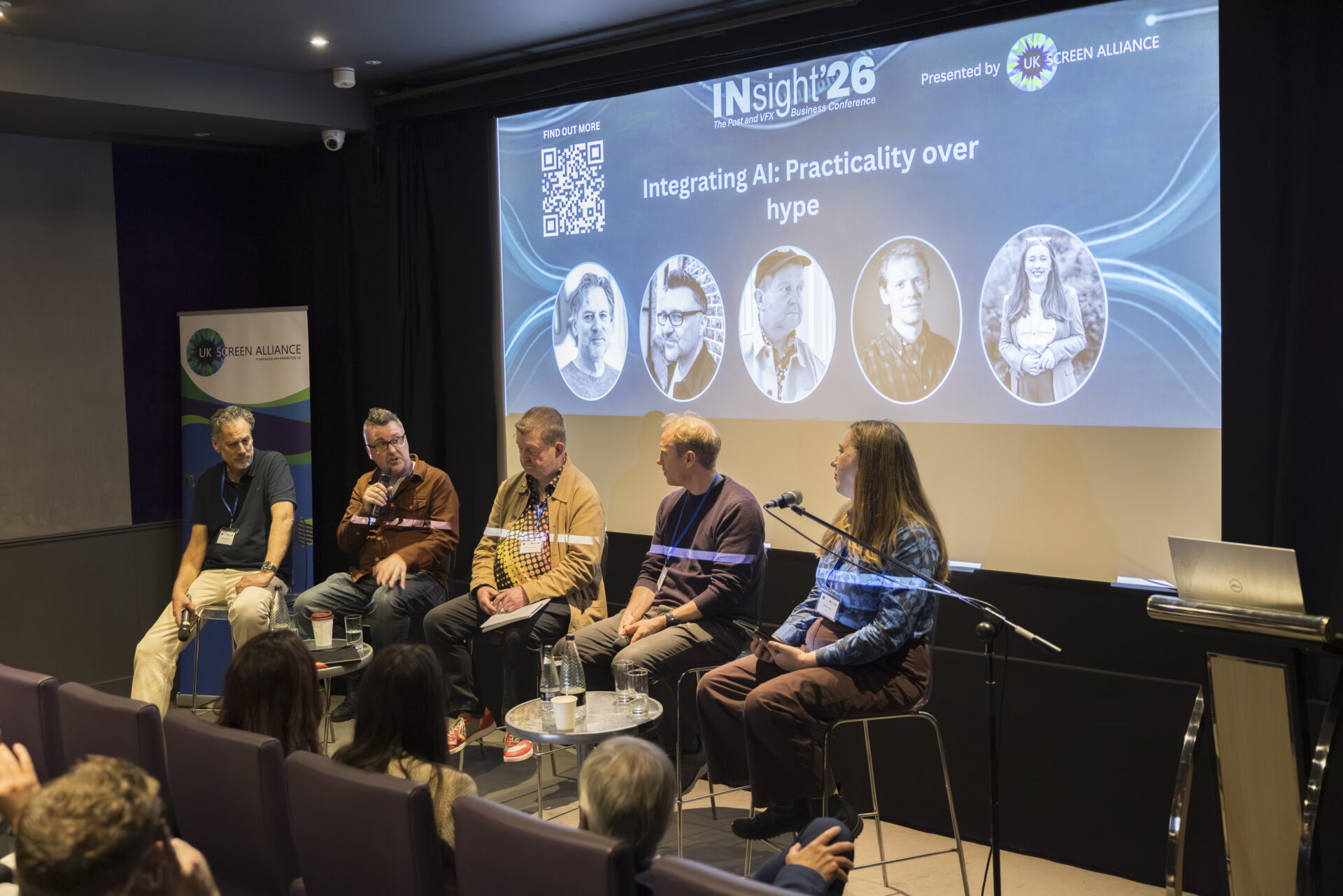
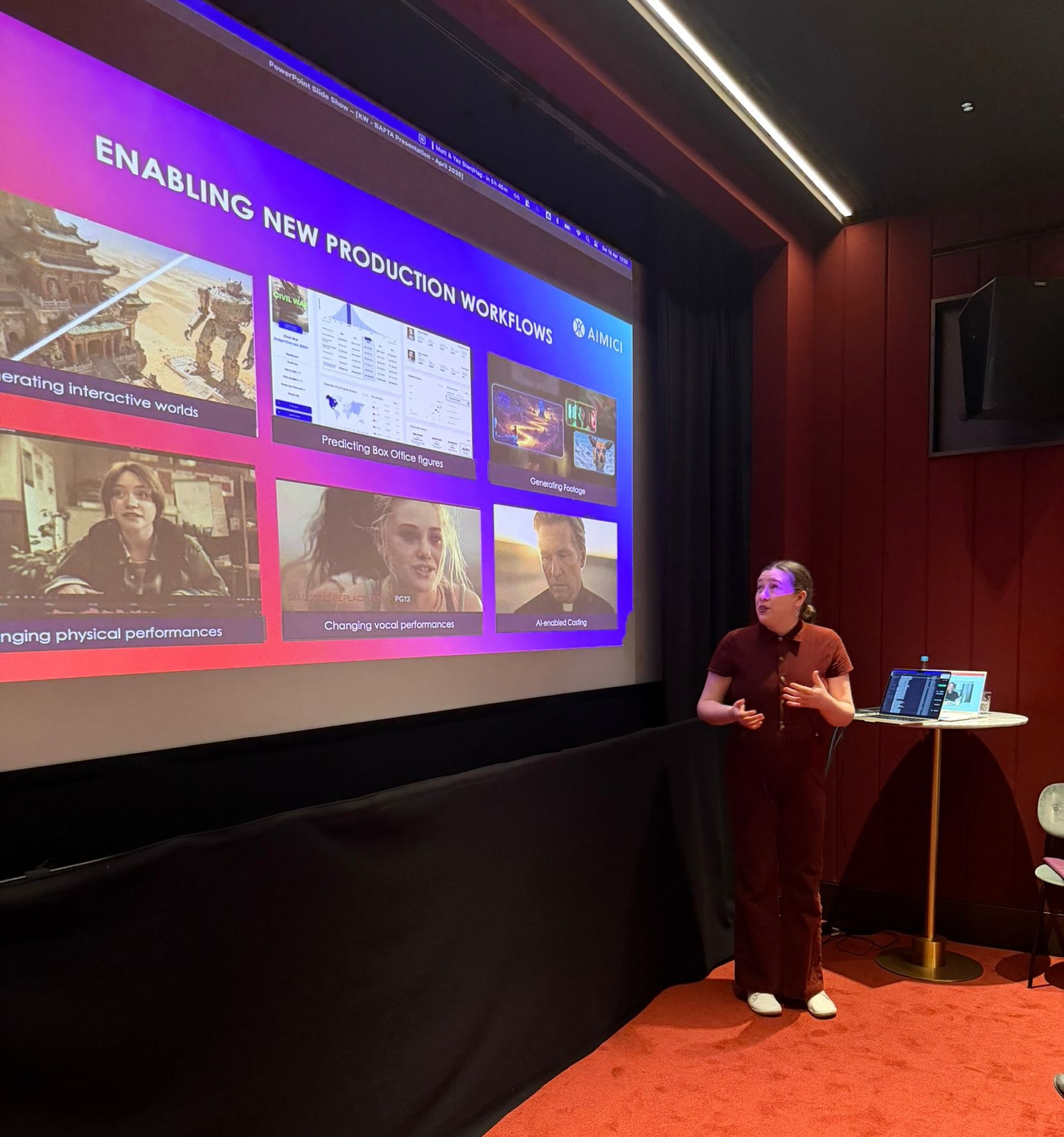
This month, AIMICI Managing Director Kathryn Webb co-hosted a 1-hour session covering AI Tools in Action at the BAFTA Connect Film & TV Forum.
Running twice during the day due to popular demand, the room was filled with emerging and mid-career film and TV professionals — documentary researchers, production managers, producers — all grappling with the same question: how do we engage with AI responsibly when the technology is moving faster than our understanding of it?
What we covered
The session had two equally weighted halves: the capabilities, and the consequences.
On the capabilities side, we showed examples of what today’s generative AI tools can already do in a production context — from character consistency across scenes to dialogue replacement with matching lip sync. The pace of advancement is striking. The now-famous “Will Smith eating spaghetti” clip — once held up as an example of AI’s limitations — now looks almost quaint compared to what current tools can produce. There are an estimated 50,000 generative AI tools available to creators today, though the vast majority aren’t worth your time.
Consumer attitudes are also shifting, though perhaps not in the direction the industry might expect. Recent research from Variety found that 54% of consumers feel indifferent to positive about performances by entirely synthetic actors, with similar figures for AI voiceover, dubbing, music and visual effects. This has significant implications for how productions think about talent, authenticity and audience expectations.
On the legal side, we brought clarity to a landscape that remains genuinely unsettled. Questions around rights, ownership and consent are still developing — both in the UK and internationally. The UK Government’s position has shifted considerably, moving from an initial proposal that would have allowed AI firms to scrape copyrighted material without compensating creators, to a more cautious “permission-first” approach. But significant grey areas remain, and production teams cannot afford to assume that because a tool is available, using it is legally straightforward.
Why balance matters
What the session tried to hold throughout — and what attendees responded to — was the importance of engaging with both sides honestly. AI presents genuine creative and operational opportunities for film and TV production. It also presents genuine risks that are not yet fully understood or legislated for. The worst thing the industry can do right now is adopt either uncritical enthusiasm or blanket rejection.
The professionals in that room are exactly the people who need to be having this conversation — and having it with the full picture in front of them.
What comes next
This is precisely the gap AIMICI’s new responsible AI training courses are designed to fill. Developed in partnership with Bournemouth University and accredited by ScreenSkills, and supported by Innovate UK’s Bridge AI programme, our courses are built specifically for film and TV industry workers and leaders — practical, grounded in current research, and designed to help teams adopt AI responsibly and effectively.
If you’d like to be first to know when the doors open, you can join the waitlist and learn more here
AIMICI is a specialist AI consultancy and educator for film and TV production. We help production teams adopt artificial intelligence responsibly and effectively, from strategy and governance through to team training.